Applications
Furniture & Cabinets
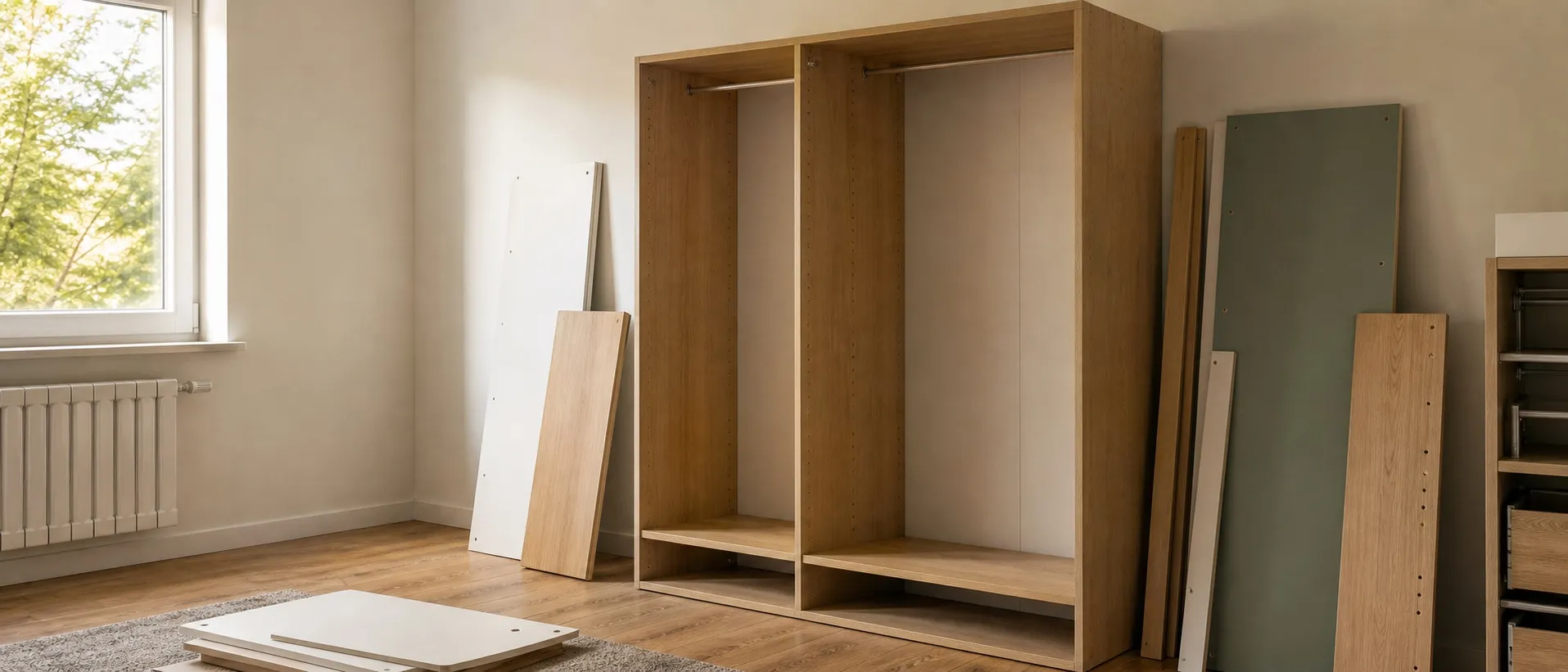
A single cabinet is built from four different panels: EN 312 P2 particleboard for the carcass and shelving, MDF for shaped and lacquered fronts, thin HDF for the back and drawer bottoms, and melamine-faced board (MFC) for parts that need to arrive pre-finished. Ningfeng Group supplies all four from ten continuous-press lines, in the emission class each export market requires.
Furniture bound for the United States needs CARB Phase 2 and EPA TSCA Title VI compliance; furniture bound for Japan is specified to JIS F★★★★. Ningfeng holds both, plus E1, E0 and ENF (formaldehyde-free), across particleboard, MDF, thin HDF and melamine-faced board, so the export grade is a specification line, not a separate sourcing problem.
Recommended panels
Particleboard (P2 / P3)
EN 312 P2 furniture-grade board carries the load in carcasses, shelving and flat-pack furniture at up to 30 mm thickness. Kitchen and bathroom cabinet carcasses specify the P3 moisture-resistant grade instead, a non-load-bearing furniture grade with 24-hour thickness swelling of 14% or less per EN 317.
View specifications →MDF
A dense, void-free core routs, profiles and lacquers cleanly, which is why MDF carries most shaped, painted and CNC-profiled cabinet fronts and doors. Standard and moisture-resistant (MR) grades cover dry and humid cabinet lines from the same specification.
View specifications →Thin HDF (2 to 3 mm)
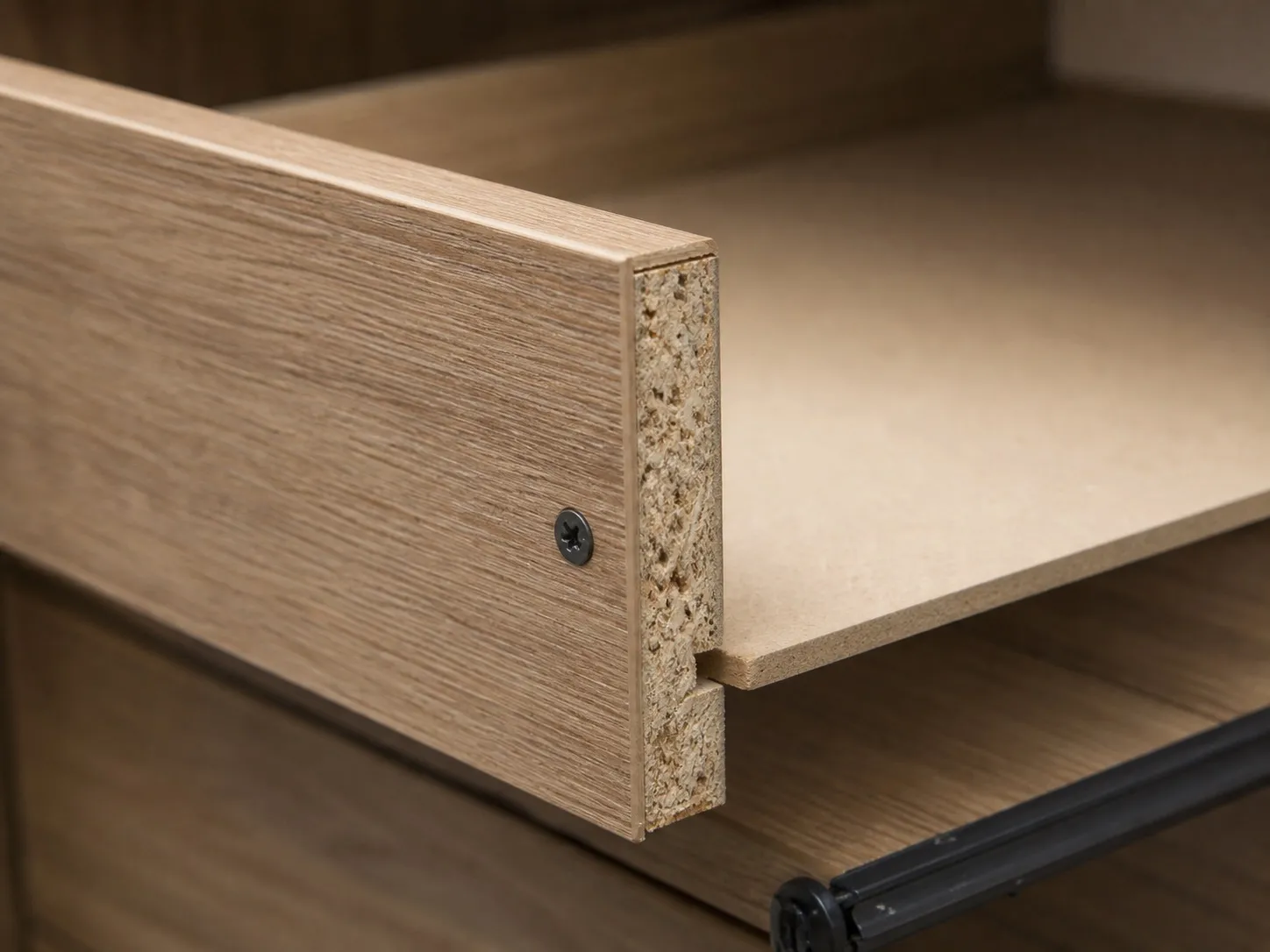
The 2 to 3 mm range is built for cabinet backs and drawer bottoms: thin enough to keep weight and material cost down, dense enough to hold staples and glue joints without splitting. It is also the substrate most buyers choose under HPL and other laminates.
View specifications →Melamine-Faced Board (MFC)
MFC ships pre-finished from Ningfeng's own lamination plant, so components arrive ready to cut, edge-band and assemble. Finishes are made to order on your decor programme.
View specifications →Matching panel grade to your export market
Furniture bound for the United States needs CARB Phase 2 compliance under the EPA's formaldehyde rule (TSCA Title VI); furniture bound for Japan is specified to JIS F★★★★, the top formaldehyde class. Ningfeng holds both, plus E1, E0 and ENF (formaldehyde-free), across particleboard, MDF, thin HDF and melamine-faced board.
Component and grade follow the same logic everywhere. Parts that carry load specify P2 or P3 particleboard up to 30 mm. Show faces that will be routed, lacquered or painted specify MDF. Backs and drawer bottoms specify thin HDF from 0.8 to 3 mm to save weight and material cost without losing joint strength.
Standard catalogue, made to order at volume
This is the supply system behind China's leading cabinetry and furniture makers: long-term relationships include Suofeiya (Sofia), Qumei, Zbom and OLO, as well as IKEA. Ten continuous-press lines give Ningfeng the scheduling room a single-line mill does not have. Standard P2, MDF and thin HDF grades ship from stock programmes; custom density, thickness, size or emission class runs are planned onto a dedicated line without disturbing standing supply.
If your cutting list calls for a size, thickness or finish outside the standard catalogue, send it. At volume, the lines can make it.
Furniture & Cabinets FAQs
Which board should I specify for wardrobe and cabinet carcasses?
EN 312 P2 furniture-grade particleboard for dry interior wardrobes and cabinets, up to 30 mm thick. For kitchen and bathroom cabinet carcasses, specify the P3 moisture-resistant grade instead, a furniture grade with 24-hour thickness swelling of 14% or less per EN 317.
Which formaldehyde grade do I need for furniture exported to the United States?
CARB Phase 2 and EPA TSCA Title VI compliance, both held across Ningfeng's particleboard, MDF, thin HDF and melamine-faced ranges. For Japan, specify JIS F★★★★. E1, E0 and ENF (formaldehyde-free) are also available for other markets.
Can Ningfeng supply panels pre-laminated with melamine?
Yes. Melamine-faced board (MFC) ships pre-finished from Ningfeng's own lamination plant, cut and ready for edge-banding and assembly. Finishes are made to order on your decor programme.
What panel goes into cabinet backs and drawer bottoms?
Thin HDF in the 2 to 3 mm range, dense enough to hold staples and glue joints without splitting, and the substrate of choice under HPL and other laminates. The 0.8 to 1.5 mm range serves lighter decorative facing and packaging uses.
Sourcing panels for furniture & cabinets?
Send your specification, grade and monthly volume. Our export team replies with a concrete offer, samples included.