Ultra-thin (0.8 to 3 mm)
Non-structural facing and filler board. The 0.8 to 1.0 mm range is a drop-in replacement for cardboard and hardboard in packaging, backing and decorative facing.
HDF
Ningfeng Group manufactures thin and ultra-thin high-density fibreboard (HDF) from 0.8 mm thickness on dedicated continuous-press lines. The company built China's first continuous line for ultra-thin fibreboard in 2014, was first in the country to press 1.0 mm board in 2015, and authored China's first ultra-thin HDF standard in 2019. Panels come in 1220 × 2440 mm and 1220 × 2745 mm formats, in formaldehyde classes E1, E0, ENF, CARB P2 and JIS F★★★★.
Thin HDF replaces plywood, hardboard and increasingly cardboard in furniture backs, drawer bottoms, door skins, decorative facings and packaging, at a lower cost per square metre and with a consistency wet-process boards cannot match.
Also specified as: thin fibreboard · ultra-thin fiberboard · thin MDF · door skin board
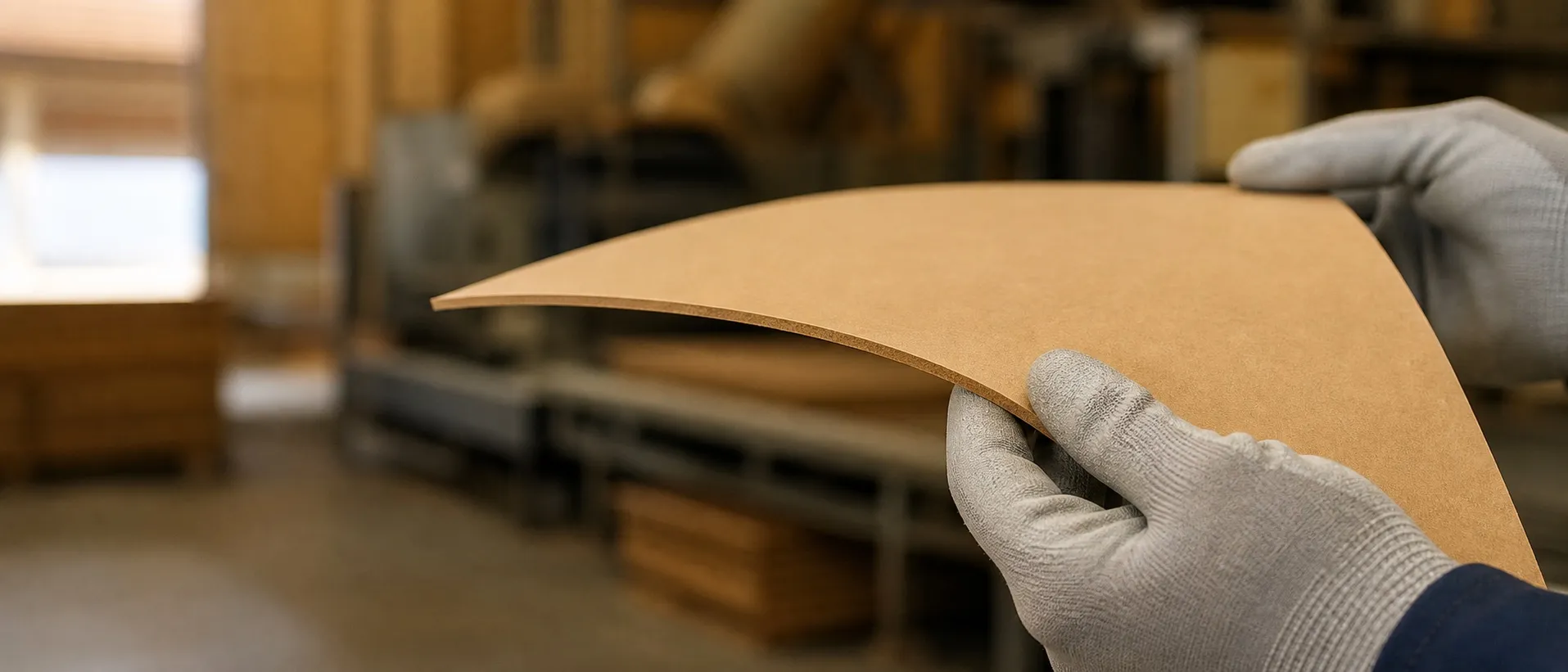
Non-structural facing and filler board. The 0.8 to 1.0 mm range is a drop-in replacement for cardboard and hardboard in packaging, backing and decorative facing.
General thin-panel work: cabinet backs, drawer bottoms, laminating substrate, die-cut parts.
High-density core board for laminate flooring, produced to the tolerance flooring presses demand.
| Product | Thin and ultra-thin HDF (high-density fibreboard) |
|---|---|
| Thickness | 0.8 to 12 mm; ultra-thin range from 0.8 mm |
| Panel sizes | 1220 × 2440 mm · 1220 × 2745 mm · custom sizes to order |
| Formaldehyde class | E1 · E0 · ENF (formaldehyde-free) · CARB P2 · JIS F★★★★, all held |
| Standards | Authored China's first ultra-thin HDF standard (2019) · GB/EN fibreboard standards · CARB Phase 2 · EPA TSCA Title VI |
| Density | High-density fibreboard; grade-level density matrix: see data sheet (on request) |
| Surface | Sanded, ready for lamination, printing, painting or melamine facing |
| Applications | Door skins · cabinet backs · drawer bottoms · laminate flooring core · decorative facing · packaging |
| Supply | Factory-direct, container or bulk; MOQ and lead time: on request |
Pressing fibreboard below 2 mm on a continuous line is a control problem most mills never solve: mat weight, press gap and sanding tolerance all shrink to fractions of a millimetre. Ningfeng has run this process since 2014, longer than anyone in China, and holds the national First Prize for Forestry Science and Technology for it. The practical result is board at 0.8 mm that arrives flat, uniform and ready for high-speed lamination.
Boards of 3 mm and below are non-structural facing and filler products. Treat them as an engineered replacement for plywood skins, hardboard and cardboard, priced to win at volume.
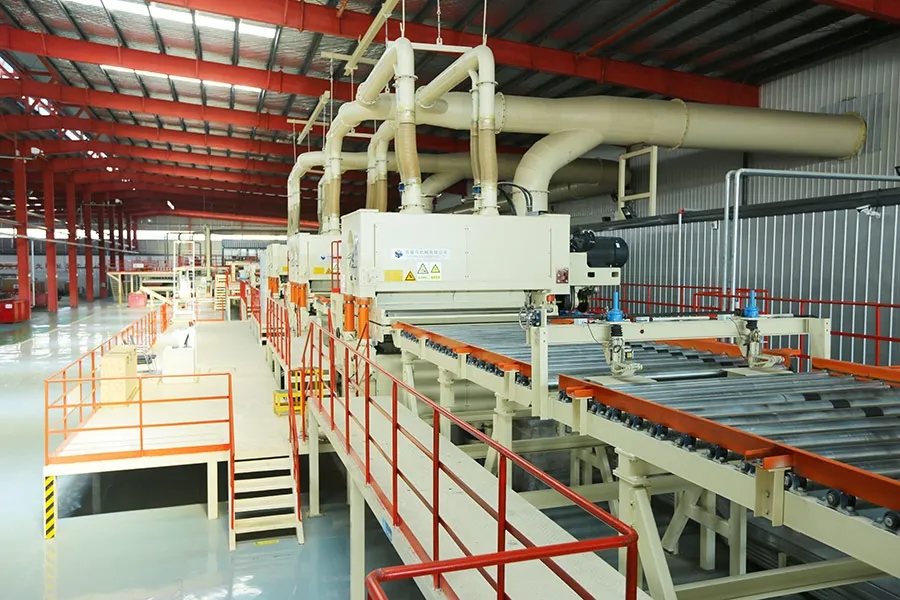
0.8 mm, produced on continuous press lines built for ultra-thin fibreboard. Ningfeng was first in China to press 1.0 mm board (2015) and now runs down to 0.8 mm as standard production, in formats up to 1220 × 2745 mm.
The 0.8 to 1 mm range serves packaging, decorative facing, electronics backing and frame backing, replacing cardboard and hardboard. From 1.5 to 3 mm it becomes door skins, drawer bottoms and cabinet backs. From 6 to 12 mm it is laminate flooring core.
No. Boards of 3 mm and below are facing and filler products for non-structural use. For flooring, the 6 to 12 mm core boards are engineered for laminate flooring systems, which is a defined non-structural application.
Ultra-thin is a specialist process, and Ningfeng defined it in China: first continuous ultra-thin line (2014), first 1.0 mm pressing (2015), author of the first national ultra-thin HDF standard (2019), now at 0.8 mm. Dedicated lines mean consistent supply, not occasional thin runs on a general line.
All classes held across the Ningfeng range apply to thin HDF: E1, E0, ENF (formaldehyde-free), CARB Phase 2 and JIS F★★★★.
Send your specification, grade and monthly volume. Our export team replies with a concrete offer, samples included.