Applications
Packaging & Industrial
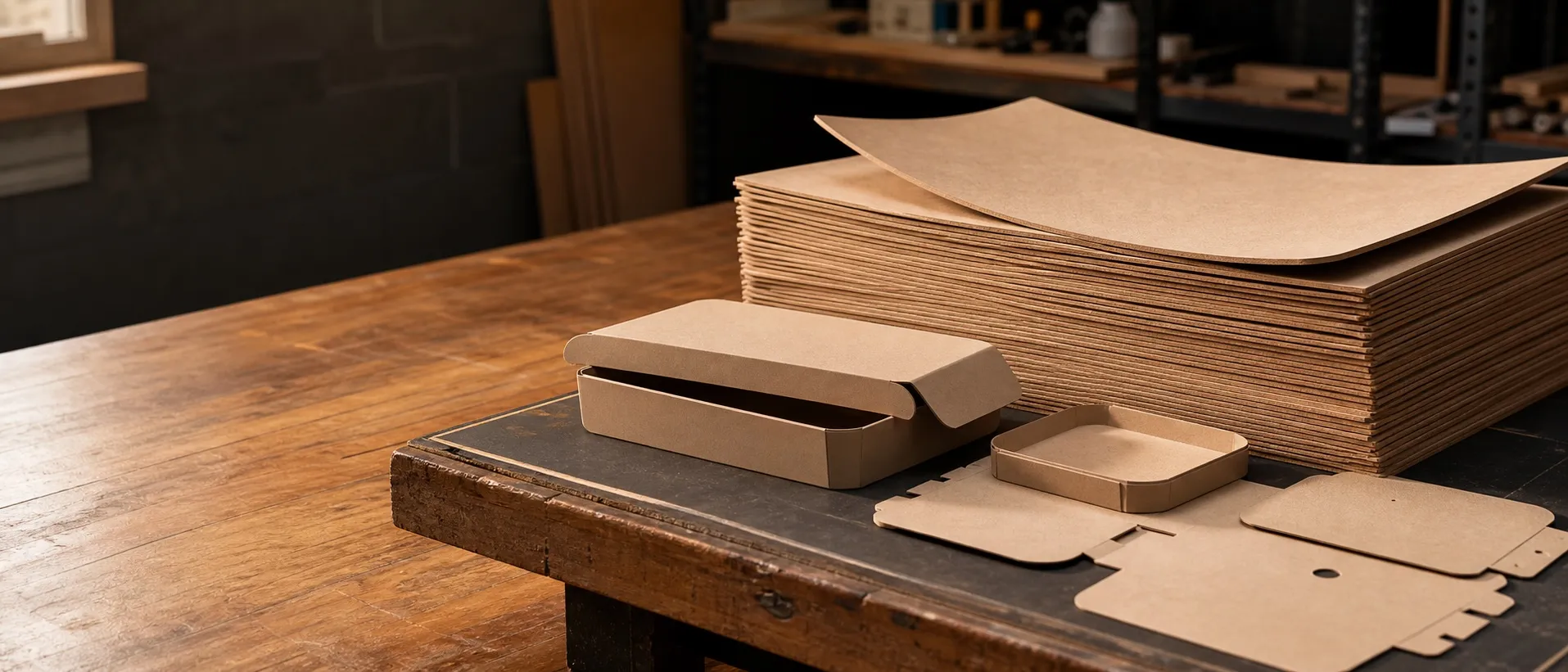
Ultra-thin HDF from 0.8 mm is Ningfeng's engineered replacement for cardboard and hardboard in box board, decorative facing, electronics backing, and frame and mirror backing, at a lower cost per square metre and with a flatness and consistency wet-process board cannot match. Ningfeng built China's first continuous-press line for ultra-thin fibreboard in 2014, was first in the country to press 1.0 mm board in 2015, and authored China's first ultra-thin HDF standard in 2019.
From 1.5 to 3 mm, the same fibreboard family becomes die-cut components and laminating substrate for HPL and other facings; particleboard and OSB extend the range to general industrial platforms, packaging bases and crating at thicknesses up to 30 mm. Every board is available in formaldehyde class E1, E0, ENF (formaldehyde-free), CARB P2 and JIS F★★★★, in standard panel sizes 1220 × 2440 mm and 1220 × 2745 mm.
Recommended panels
Ultra-Thin HDF (0.8 to 1 mm)
The direct cardboard and hardboard replacement for box board, decorative facing, electronics backing and frame and mirror backing, run on dedicated continuous-press lines since 2014 for a flatness and consistency wet-process board cannot match.
View specifications →Particleboard (industrial platforms)
General-purpose board up to 30 mm for industrial platforms, packaging bases and crating; the Lightweight grade reduces handling weight and freight cost where that matters more than surface finish.
View specifications →OSB (packaging and industrial fixtures)
A furniture and interior-grade board for packaging, crating and industrial fixtures where the oriented-strand face does not need to be hidden, at a lower material cost than a faced panel.
View specifications →0.8 mm: the cardboard and hardboard replacement
Pressing fibreboard below 2 mm on a continuous line is a control problem general mills do not solve: mat weight, press gap and sanding tolerance all shrink to fractions of a millimetre. Ningfeng has run the process since 2014, built China's first continuous ultra-thin line that year, was first in the country to press 1.0 mm board in 2015, and authored China's first ultra-thin HDF standard in 2019, now running as low as 0.8 mm in standard production.
The 0.8 to 1 mm range is a drop-in replacement for cardboard and hardboard in box board, decorative facing, electronics backing and frame and mirror backing, priced to win at volume and consistent sheet to sheet in a way wet-process board is not.
Die-cut components and laminating substrate
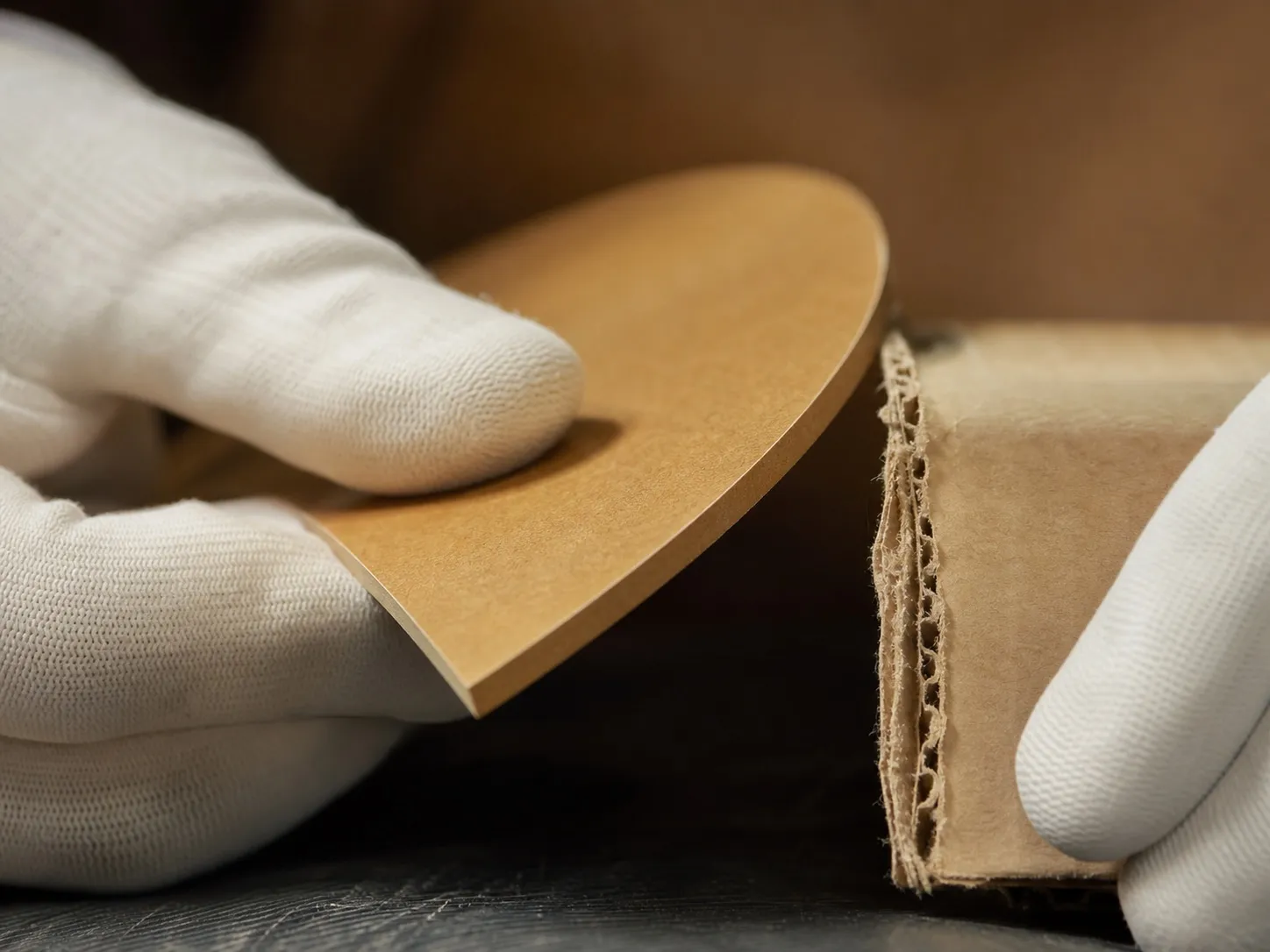
From 1.5 to 3 mm, the same fibreboard family supplies die-cut parts, laminating substrate under HPL and other facings, and general thin-panel industrial components, dense enough to hold a clean die-cut edge without splitting.
Panels ship in standard sizes 1220 × 2440 mm and 1220 × 2745 mm, sanded and ready for lamination, printing or painting, in formaldehyde class E1, E0, ENF (formaldehyde-free), CARB P2 and JIS F★★★★.
Packaging & Industrial FAQs
What thickness range does Ningfeng produce for cardboard and hardboard replacement?
0.8 to 1 mm ultra-thin HDF, run on dedicated continuous-press lines for box board, decorative facing, electronics backing and frame and mirror backing. It is a direct drop-in replacement for cardboard and hardboard at a lower cost per square metre.
Why choose engineered HDF over cardboard for box board and backing panels?
Consistency and flatness sheet to sheet, which wet-process cardboard cannot match, plus a manufacturing history general fibreboard mills do not have: China's first continuous ultra-thin line (2014), first 1.0 mm pressing (2015), and the country's first ultra-thin HDF standard, authored by Ningfeng in 2019.
Can thin HDF be die-cut for industrial parts?
Yes, the 1.5 to 3 mm range holds a clean die-cut edge without splitting and is also specified as laminating substrate under HPL and other facings.
What is the MOQ for ultra-thin HDF?
MOQ and lead time depend on thickness and finish. Contact info@nfwoods.com with your specification and target volume for a concrete offer.
Sourcing panels for packaging & industrial?
Send your specification, grade and monthly volume. Our export team replies with a concrete offer, samples included.